Showing posts with label operational safety. Show all posts

Regulating Automated Vehicles with Human Drivers

Summary 

Regulatory oversight of automated vehicle operation on public roads is being gamed by the vehicle automation industry via two approaches: (1) promoting SAE J3016, which is explicitly not a safety standard, as the basis for safety regulation, and (2) using the "Level 2 loophole" to deploy autonomous test platforms while evading regulatory oversight. Regulators are coming to understand they need to do something to reign in the reckless driving and other safety issues that are putting their constituents at risk. We propose a regulatory approach to deal with this situation that involves a clear distinction between production "cruise control" style automation that can be subject to conventional regulatory oversight vs. test platforms that should be regulated via SAE J3018 use for testing operational safety.
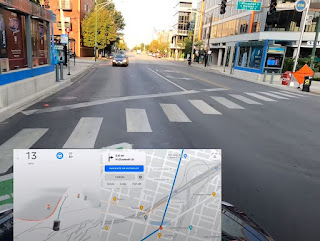
Video showing Tesla FSD beta tester unsafely turning into oncoming traffic.

Do not use SAE J3016 in regulations

The SAE J3016 standards document has been promoted by the automotive industry for use in regulations, and in fact is the basis for regulations and policies at the US federal, state, and municipal levels. However, it is fundamentally unsuitable for the job. The issues with using SAE J3016 for regulations are many, so we provide a brief summary. (More detail can be found in Section V.A of our SSRN paper.)

SAE J3016 contains two different types of information. The first is a definition of terminology for automated vehicles, which is not really the problem, and in general could be suitable for regulatory use. The second is a definition of the infamous SAE Levels, which are highly problematic for at least the following reasons:

In practice, one of two big issues is the "Level 2 Loophole" in which a company might claim that the fact there is a safety driver makes its system Level 2, while insisting it does not intend to ever release that same automated driving feature as a higher level feature. This could be readily gamed by, for example, saying that Feature X, which is in fact a prototype fully automated driving system, is Level 2 at first. When the company feels that the prototype is fully mature, it could simply rebrand it Feature Y, slap on a Level 4 designation, and proceed to sell that feature without ever having applied for a Level 4 testing permit. We argue that this is essentially what Tesla is doing with its FSD "beta" program that has, among other things, yielded numerous social media videos of reckless driving despite claims that its elite "beta test" drivers are selected to be safe (e.g., failure to stop at stop signs, failure to stop at red traffic signals, driving in opposing direction traffic lanes).

The second big practical issue is that J3016 is not intended to be a safety standard, but is being used as such in regulations. This is making regulations more complex than they need to be, stretching the limits of the esoteric technical expertise in AVs required of regulatory agencies, especially for municipalities. This is combined with the AV industry promoting a series of myths as part of a campaign to deter regulator effectiveness at protecting constituents from potential safety issues. The net result is that most regulations do not actually address the core safety issues related to on-road testing of this immature technology, in large part because they aren't really sure how to do that.

For road testing safety purposes, regulators should focus on both the operational concept and technology maturity of the vehicle being operated rather than on what might eventually be built as a product. In other words "design intent" isn't relevant to the risk being presented to road users when a test vehicle veers into opposing traffic. Avoiding crashes is the goal, not parsing overly-complex engineering taxonomies.

The solution is to reject SAE J3016 levels as a basis for regulation, instead favoring other industry standards that are actually intended to be relevant to safety. (Again, using J3016 for terminology is OK if the terms are relevant, but not the level definitions.)

Four Regulatory Categories

We propose four regulatory categories, with details to follow:

  • Non-automated vehicles: These are vehicles that DO NOT control steering on a sustained basis in any operational mode. They might have adaptive speed control, automatic emergency braking, and active safety features that temporarily control steering (e.g., an emergency swerve around obstacles capability, or bumping the steering wheel at lane boundaries to alert the driver).
  • Low automation vehicles: These are vehicles with automation that CAN control steering on a sustained basis (and, in practice, also vehicle speed). They are vehicles that ordinary drivers can operate safely and intuitively along the lines of a "cruise control" system that performs lane keeping in addition to speed control. In particular, they have these characteristics:
    • Can be driven with acceptable safety by an ordinary licensed driver with no special training beyond that required for a non-automated version of the same vehicle type.
    • Includes an effective driver monitoring system (DMS) to ensure adequate driver alertness despite inevitable automation complacency
    • Deters reasonably foreseeable misuse and abuse, especially with regard to DMS and its operational design domain (ODD)
    • Safety-relevant behavioral inadequacies consist of omissive behaviors rather than actively dangerous behavior
    • Safety-relevant issues are both intuitively understood and readily mitigated by driver intervention with conventional vehicle controls (steering wheel, brake pedal)
    • Automation is not capable of executing turns at intersections.
    • Field data monitoring indicates that vehicles remain at least as safe as non-automated vehicles that incorporate comparable active safety features over the vehicle life.
  • Highly automated vehicles: These are vehicles in which a human driver has no responsibility for safe driving. If any person inside the vehicle (or a tele-operator) can be blamed for a driving mishap, it is not a highly automated vehicle. Put simply, it's safe for anyone to go to sleep in these vehicles (including no requirement for a continuous remote safety driver) when in automated operation.
  • Automation test platforms: These are vehicles that have automated steering capability and have a person responsible for driving safety, but do meet one or more of the listed requirements for low automation vehicles. In practical terms, such vehicles tend to be test platforms for capabilities that might someday be highly automated vehicles, but require a human test driver -- either in vehicle or remote -- for operational safety.
Non-automated vehicles can be subject to regulatory requirements for conventional vehicles, and correspond to SAE Levels 0 and 1. We discuss each of the remaining three categories in turn.

Low automation vehicles

The idea of the low automation vehicle is that it is a tame enough version of automation that any licensed driver should be able to handle it. Think of it as "cruise control" that works for both steering and speed. It keeps the car moving down the road, but is quite stupid about what is going on around the car. DMS and ODD enforcement along with mitigation of misuse and abuse are required for operational safety. Required driver training should be no more than trivial familiarization with controls that one would expect, for example, during a car rental transaction at an airport rental lot.

Safety relevant issues should be omissive (vehicle fails to do something) rather than errors of commission (vehicle does the wrong thing). For example, a vehicle might gradually drift out of lane while warning the driver it has lost lane lock, but it should not aggressively turn across a centerline into oncoming traffic. With very low capability automation this should be straightforward (although still technically challenging), because the vehicle isn't trying to do more than drive within its lane. As capabilities increase, this becomes more difficult to design, but dealing with that is up to the companies who want to increase capabilities. We draw a hard line at capability to execute turns at intersections, which is clearly an attempt at high automation capabilities, and is well beyond the spirit of a "cruise control" type system.

An important principle is that human drivers of a production low automation vehicle should not serve as Moral Crumple Zones by being asked to perform beyond civilian driver capabilities to compensate for system shortcomings and work-in-progress system defects. If human drivers are being blamed for failure to compensate for behavior that would be considered defective in a non-automated vehicle (such attempting to turning across opposing traffic for no reason), this is a sign that the vehicle is really a test platform in disguise.

Low automation vehicles could be regulated by holding the vehicles accountable to the same regulations as non-automated vehicles as is done today for Level 2 vehicles. However, the regulatory change would be excluding some vehicles currently called "Level 2" from this category if they don't meet all the listed requirements. In other words, any vehicle not meeting all the listed requirements would require special regulatory handling.

Highly automated vehicles

These are highly automated vehicles for which the driver is not responsible for safety, generally corresponding to SAE Levels 4 and 5.  (As a practical matter, some vehicles that are advertised as Level 3 will end up in this category in practice if they do not hold the driver accountable for crashes when automation is engaged.)

Highly automated vehicles should be regulated by requiring conformance to industry safety standards such as ISO 26262, ISO 21448, and ANSI/UL 4600. This is an approach NHTSA has already proposed, so we recommend states and municipalities simply track that topic for the time being. 

There is a separate issue of how to regulate vehicle testing of these vehicles without a safety driver, but that issue is beyond the scope of this essay. 

Automation test platforms

These are vehicles that need skilled test drivers or remote safety monitoring to operate safely on public roads.  Operation of such vehicles should be done in accordance with SAE J3018, which covers safety driver skills and operational safety procedures, and should also be done under the oversight of a suitable Safety Management System (SMS) such as one based on the AVSC SMS guidelines.

Crashes while automation is turned on are generally attributed to a failure of the safety driver to cope with dangerous vehicle behavior, with dangerous behavior being an expectation for any test platform. (The point of a test platform is to see if there are any defects, which means defects must be expected to manifest during testing.)

In other words, with an automation test platform, safety responsibility primarily rests with the safety driver and test support team, not the automation. Test organizations should convince regulators that testing will overall present an acceptably low risk to other road users. Among other things, this will require that safety drivers be specifically trained to handle the risks of testing, which differ significantly from the risks of normal driving. For example, use of retail car customers who have had no special training per the requirements of SAE J3018 and who are conducting testing without the benefit of an appropriate SMS framework should be considered unreasonably risky.

This category covers all vehicles currently said to be Level 4/5 test vehicles, and also any other Level 2 or Level 3 vehicles that make demands on driver attention and reaction capabilities that are excessive for drivers without special tester training.

Regulating automated test platforms should concentrate on driver safety, per my State/Municipal DOT regulatory playbook. This includes specifically requiring compliance with practices in SAE J3018 and having an SMS that is at least as strong as the one discussed in the AVSC SMS guidelines.

Wrap-up

Automated vehicles regulatory data reporting at the municipal and state levels should concentrate on collecting mishap data to ensure that the driver+vehicle combination is acceptably safe. A high rate of crashes indicates that either the drivers aren't trained well enough, or the vehicle is defective. Which way you look at it depends on whether you're a state/municipal government or the US government, and whether the vehicle is a test platform or not. But the reality is that if drivers have trouble driving the vehicles, you need to do something to fix that situation before there is a severe injury or fatality on your watch.

The content in this essay is an informal summary of the content in Section V of: Widen, W. & Koopman, P., "Autonomous Vehicle Regulation and Trust" SSRN, Nov. 22, 2021. In case of doubt or ambiguity, that SSRN publication should be consulted for more comprehensive treatment.

-----
Philip Koopman is an associate professor at Carnegie Mellon University specializing in autonomous vehicle safety. He is on the voting committees for the industry standards mentioned. Regulators are welcome to contact him for support.


(Obsolete article) Automation Levels for Vehicle Testing

(This article is for archival purposes only. A newer take on this topic is here:  
https://safeautonomy.blogspot.com/2021/11/regulating-AVs-with-human-drivers.html)

A More Precise Definition for ANSI/UL 4600 Safety Performance Indicators (SPIs)

Safety Performance Indicators (SPIs) are defined by chapter 16 of ANSI/UL 4600 in the context of autonomous vehicles as performance metrics that are specifically related to safety (4600 at 16.1.1.6.1).

Woman in Taxi looking at phone.  Photo by Uriel Mont from Pexels

This is a fairly general definition that is intended to encompass both leading metrics (e.g., number of failed detections of pedestrians for a single sensor channel) and lagging metrics (e.g., number of collisions in real world operation).  

However, it is so general that there can be a tendency to try to call metrics that are not related to safety SPIs when, more properly, they are really KPIs. As an example, ride quality smoothness when cornering is a Key Performance Indicator (KPI) that is highly desirable for passenger comfort. But it might have little or nothing to do with the crash rate for a particular vehicle. (It might be correlated -- sloppy control might be associated with crashes, but it might not be.)

So we've come up with a more precise definition of SPI (with special thanks to Dr. Aaron Kane for long discussions and crystalizing the concept).

An SPI is a metric supported by evidence that uses a
threshold comparison to condition a claim in a safety case.

Let's break that down:

  • SPI - Safety Performance Indicator - a {metric, threshold} pair that measures some aspect of safety in an autonomous vehicle.
  • Metric - a value, typically related to one or more of product performance, design quality, process quality, or adherence to operational procedures. Often metrics are related to time (e.g., incidents per million km, maintenance mistakes per thousand repairs) but can also be related to particular versions (e.g., significant defects per thousand lines of code; unit test coverage; peer review effectiveness)
  • Evidence - the metric values are derived from measurement rather than theoretical calculations or other non-measurement sources
  • Threshold - a metric on its own is not an SPI because context within the safety case matters. For example, false negative detections on a sensor as a number is not a SPI because it misses the part about how good it has to be to provide acceptable safety when fused with other sensor data in a particular vehicle's operational context. ("We have 1% false negatives on camera #1. Is that good enough? Well, it depends...") There is no limit to the complexity of the threshold which might be, for example, whether a very complicated state space is either inside or outside a safety envelope.  But in the end the answer is some sort of comparison between the metric and the threshold that results in "true" or "false."  (Analogous multi-valued operations and outputs are OK if you are using multi-valued logic in your safety case.) We call the state of an SPI output being "false" an SPI Violation.
  • Condition a claim - each SPI is associated with a claim in a safety case. If the SPI is true the claim is supported by the SPI. If the SPI is false then the associated claim has been falsified. (SPIs based on time series data could be true for a long time before going false, so this is a time and state dependent outcome in many cases.)
  • Safety case - Per ANSI/UL 4600 a safety case is "a structured argument, supported by a body of evidence, that provides a compelling, comprehensible and valid case that a system is safe for a given application in a given environment." In the context of that standard, anything that is related to safety is in the safety case. If it's not in the safety case, it is by definition not related to safety.
A direct conclusion of the above is that if a metric does not have a threshold, or does not condition a claim in a safety case, then it can't be an SPI.

Less formally, the point of an SPI is that you've built up a safety case, but there is always the chance you missed something in the safety case argument (forgot a relevant reason why a claim might not be true), or made an assumption that isn't as true as you thought it was in the real world, or otherwise have some sort of a problem with your safety case. An SPI violation amounts to: "Well, you thought you had everything covered and this thing (claim) was always true. And yet, here we are with the claim being false when we encountered a particular unforeseen situation in validation or real world operation. Better update your safety argument!"

In other words, a SPI is a measurement you take to make sure that if your safety case is invalidated you'll detect it and notice that your safety case has a problem so that you can fix it.

An important point of all this is that not every metric is an SPI. SPIs are a very specific term. The rest are all KPIs.  

KPIs can be very useful, for example in measuring progress toward a functional system. But they are not SPIs unless they meet the definition given above.

NOTES:

(1) Aviation uses SPI for metrics related to the operational phase and SMS activities. The definition given here is rooted in ANSI/UL 4600 and is a superset of the aviation use, including technical metrics and design cycle metrics as well as operational metrics.

(2) In this formulation an SPI is not quite the same as a safety monitor. It might well be that some SPI violations also happen to trigger a vehicle system shutdown. But for many SPI violations there might not be anything actionable at the individual vehicle level. Indeed, some SPI violations might only be detectable at the fleet level in retrospect. For example, if you have a budget of 1 incident per 100 million km of a particular type, an individual vehicle having such an incident does not necessarily mean the safety case has been invalidated. Rather, you need to look across the fleet data history to see if such an incident just happens to be that budgeted one in 100 million based on operational exposure, or is part of a trend of too many such incidents.

(3) We pronounce "SPI" as "S-P-I" rather than "spy" after a very confusing conversation in which we realized we needed to explain to a government official that we were not actually proposing that the CIA become involved with validating autonomous vehicle safety.


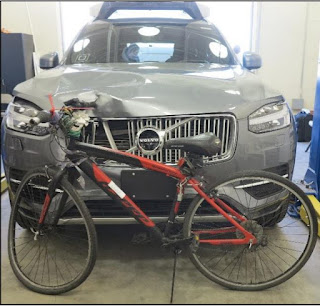
The Lesson Learned from the Tempe Arizona Autonomous Driving System Testing Fatality NTSB Report


Now that the press flurry over the NTSB's report on the Autonomous Driving System (ADS) fatality in Tempe has subsided, it's important to reflect on the lessons to be learned. Hats off to the NTSB for absolutely nailing this. Cheers to the Press who got the messaging right. But not everyone did. The goal of this essay is to help focus on the right lessons to learn, clarify publicly stated misconceptions, and emphasize the most important take-aways.

I encourage everyone in the AV industry to watch the first 5 and a half minutes of the NTSB board meeting video ( Youtube: Link // NTSB Link). Safety leadership should watch the whole thing. Probably twice. Then present a summary at your company's lunch & learn.

Pay particular attention to this part from Chairman Sumwalt: "If your company tests automated driving systems on public roads, this crash -- it was about you.  If you use roads where automated driving systems were being tested, this crash -- it was about you."

I live in Pittsburgh and these public road tests happen near my place of work and my home. I take the lessons from this crash personally. In principle, every time I cross a street I'm potentially placed at risk by any company that might be cutting corners on safety. (I hope that's none. All the companies testing here have voluntarily submitted compliance reports for the well-drafted PennDOT testing guidelines. But not every state has those, and those guidelines were developed largely in response to the fatality we’re discussing.)

I also have long time friends who have invested their careers in this technology. They have brought a vibrant and promising industry to Pittsburgh and other cities.  Negative publicity resulting from a major mishap can threaten the jobs of those employed by those companies.

So it is essential for all of us to get safety right.

The first step: for anyone in charge of testing who doesn't know what a Safety Management System (SMS) is: (A) Watch that NSTB hearing intro. (B) Pause testing on public roads until your company makes a good start down that path. (Again, the PennDOT guidelines are a reasonable first step accepted by a number of companies. LINK)  You’ll sleep better having dramatically improved your company’s safety culture before anyone gets hurt unnecessarily.


Clearing up some misconceptions
I’ve seen some articles and commentary that missed the point of all of this.Large segments of coverage emphasized technical shortcomings of the system - That's not the point. Other coverage highlighted test driver distraction - That's not the point either.  The fatal mishap involved technical shortcomings, and the test driver was not paying adequate attention. Both contributed to the mishap, and both were bad things.

But the lesson to learn is that solid safety culture is without a doubt necessary to prevent avoidable fatalities like these. That is the Point.

To make the most of this teachable moment let's break things down further. These discussions are not really about the particular test platform that was involved. The NTSB report gave that company credit for significant improvement. Rather, the objective is to make sure everyone is focused on ensuring they have learned the most important lesson so we don’t suffer another avoidable ADS testing fatality.

A self-driving car killed someone - NOT THE POINT
This was not a self-driving car. It was a test platform for Automated Driving System (ADS) technology. The difference is night and day.  Any argument that this vehicle was safe to operate on public roads hinged on a human driver not only taking complete responsibility for operational safety, but also being able to intervene when the test vehicle inevitably made a mistake. It's not a fully automated self-driving car if a driver is required to hover with hands above the steering wheel and foot above the brake pedal the entire time the vehicle is operating.

It's a test vehicle. The correct statement is: a test vehicle for developing ADS technology killed someone.

The pedestrian was initially said to jump out of the dark in front of the car - NOT THE POINT
I still hear this sometimes based on the initial video clip that was released immediately after the mishap. The pedestrian walked across almost 4 lanes of road in view of the test vehicle before being struck. The test vehicle detected the pedestrian 5.6 seconds before the crash. That was plenty of time to avoid the crash, and plenty of time to track the pedestrian crossing the street to predict that a crash would occur. Attempting to claim that this crash was unavoidable is incorrect, and won't prevent the next ADS testing fatality.

It's the pedestrian's fault for jaywalking - NOT THE POINT
Jaywalking is what people do when it is 125 yards to the nearest intersection and there is a paved walkway on the median. Even if there is a sign saying not to cross.  Tearing up the paved walkway might help a little on this particular stretch of road, but that's not going to prevent jaywalking as a potential cause of the next ADS testing fatality.

Victim's apparent drug use - NOT THE POINT
It was unlikely that the victim was a fully functional, alert pedestrian. But much of the population isn't in this category for other reasons. Children, distracted walkers, and others with less than perfect capabilities and attention cross the street every day, and we expect drivers to do their best to avoid hitting them.

There is no indication that the victim’s medical condition substantively caused the fatality. (We're back to the fact that the pedestrian did not jump in front of the car.) It would be unreasonable to insist that the public has the responsibility to be fully alert and ready to jump out of the way of an errant ADS test platform at all times they are outside their homes.

Tracking and classification failure - NOT THE POINT
The ADS system on the test vehicle suffered some technical issues that prevented predicting where the pedestrian would be when the test vehicle got there, or even recognizing the object it was sensing was a pedestrian walking a bicycle. However, the point of operating the test vehicle was to find and fix defects.

Defects were expected, and should be expected on other ADS test vehicles. That's why there is a human safety driver. Forbidding public road testing of imperfect ADS systems basically outlaws road testing at this stage. Blaming the technology won't prevent the next ADS testing fatality, but it could hurt the industry for no reason.

It's the technology's fault for ignoring jaywalkers - NOT THE POINT
This idea has been circulating, but apparently this isn't quite true. Jaywalkers aren't ignored, but rather according to the information presented by the NTSB a pedestrian isn't expected to cross the street at first. Once the pedestrian moves for a while a track is built up that could indicate street crossing, but until then movement into the street is considered unexpected if the pedestrian is not at a designated crossing location. A deployment-ready ADS could potentially use a more sophisticated approach to predict when a pedestrian would enter the roadway.

Regardless of implementation, this did not contribute to the fatality because the system never actually classified the victim as a pedestrian. Again, improving this or other ADS technical features won't prevent the next ADS testing fatality. That’s because testing safety is about the safety driver, not which ADS prototype functions happen to be active on any particular test run.

ADS emergency braking behavior - NOT THE POINT
The ADS emergency braking function had behaviors that could hinder its ability to provide backup support to the safety driver. Perhaps another design could have done better for this particular mishap. However, it wasn't the job of the ADS emergency braking to avoid hitting a pedestrian. That was the safety driver's job. Improving ADS emergency braking capabilities might reduce the probability of an ADS testing fatality, but won't entirely prevent the next fatality from happening sooner than it should.

Native emergency braking disabled - NOT THE POINT
It looks bad to have disabled the built-in emergency braking system on the passenger vehicle used as the test platform. The purpose of such systems is to help out after the driver makes a mistake. In this case there is a good, but not perfect, chance it would have helped. But as with the ADS emergency braking function, this simply improves the odds. Any safety expert is going to say your odds are better with both belt and suspenders, but enabling this function alone won't entirely prevent the next ADS testing fatality from happening before it should.

Inattentive safety driver - NOT THE POINT
There is no doubt that an inattentive safety driver is dangerous when supervising an ADS test vehicle. And yet, driver complacency is the expected outcome of asking a human to supervise an automated system that works most of the time. That’s why it’s important to ensure that driver monitoring is done continually and used to provide feedback. (In this case a form of driver monitoring equipment was installed, but data was apparently not used in a way that assured effective driver alertness.)

While enhanced training and stringent driver selection can help, effective analysis and action taken upon monitoring data is required to ensure that drivers are actually paying attention in practice. Simply firing this driver without changing anything else won't prevent the next ADS testing fatality from happening to some other driver who has slipped into bad operational habits.

A fatality is regrettable, but human drivers killed about 100 people that same day with minimal news attention - NOT THE POINT
Some commentators point out the ratio of fatalities caused by test vehicles vs. general automotive fatality rates. They then generally argue that a few deaths in comparison to the ongoing carnage of regular cars is a necessary and appropriate price to pay for progress. However, this argument is not statistically valid.

Consider a reasonable goal that ADS testing (with highly qualified, alert drivers presumed) should be no more dangerous than the risk presented by normal cars. For normal US cars that's ballpark 500 million road miles per pedestrian fatality. This includes mishaps caused by drunk, distracted, and speeding drivers. Due to the far smaller number of miles being driven by current test platform fleet sizes, the "budget" for fatal accidents due to ADS road testing phase should, at this early stage, still be zero.

The fatality somehow “proves” that self-driving car technology isn't viable - NOT THE POINT
Some have tried to draw conclusions about the viability of ADS technology from the fact that there was a testing fatality. However, the issues with ADS technical performance only prove what we already knew. The technology is still maturing, and a human needs to intervene to keep things safe. This crash wasn't about the maturity of the technology; it was about whether the ADS public road testing itself was safe.

Concentrating on technology maturity (for example, via disclosing disengagement rates) serves to focus attention on a long term future of system performance without a safety driver. But the long term isn’t what’s at issue.

The more pressing issue is ensuring that the road testing going on right now is sufficiently safe. At worst, continued use of disengagement rates as the primary metric of ADS performance could hurt safety rather than help. This is because disengagements, if gamed, could incentivize safety drivers to take chances by avoiding disengagements in uncertain situations to make the numbers look better. (Some companies no doubt have strategies to mitigate this risk. But those are probably the companies with an SMS, which is back to the point that matters.)

THE POINT: The safety culture was broken
Safety culture issues were the enabler for this particular crash. Given the limited number of miles that can be accumulated by any current test fleet, we should see no fatalities occur during ADS testing. (Perhaps a truly unavoidable fatality will occur. This is possible, but given the numbers it is unlikely if ADS testing is reasonably safe. So our goal should be set to zero.) Safety culture is critical to ensure this.

The NTSB rightly pushes hard for a safety management system (SMS). But be careful to note that they simply say that this is a part of safety culture, not all of it. Safety culture means, among other things, taking responsibility for ensuring that their safety drivers are actually safe despite the considerable difficulty of accomplishing that. Human safety drivers will make mistakes, but a strong safety culture accounts for such mistakes in ensuring overall safety.

It is important to note that the urgent point here is not regulating self-driving car safety, but rather achieving safe ADS road testing. They are (almost) two entirely different things. Testing safety is about whether the company can consistently put an alert, able-to-react safety driver on the road. On the other hand, ADS safety is about the technology. We need to get to the technology safety part over time, but ADS road testing is the main risk to manage right now.

Perhaps dealing with ADS safety would be easier if the discussions of testing safety and deployment safety were more cleanly separated.

THE TAKEAWAYS:

Chairman Sumwalt summed it up nicely in the intro. (You did watch that 5 and half minute intro, right?)  But to make sure it hits home, this is my take:

One company's crash is every company's crash.  You'll note I didn't name the company involved, because really that's irrelevant to preventing there from being a next fatality and the potential damage it could do to the industry’s reputation.

The bigger point is every company can and should institute good safety culture before further fatalities take place if they have not done so already. The NTSB credited the company at issue with significant change in the right direction.  But it only takes one company who hasn’t gotten the message to be a problem for everyone. We can reasonably expect fatalities involving ADS technology in the future even if these systems are many times safer than human drivers. But there simply aren’t that many vehicles on the road yet for a truly unavoidable mishap to be likely to occur. It’s far too early.

If your company is testing (or plans to test) autonomous vehicles, get a Safety Management System in place before you do public road testing. At least conform to the details in the PennDOT testing guidelines, even if you’re not testing in Pennsylvania. If you are already testing on public roads without an SMS, you should stand down until you get one in place.

Once you have an SMS, consider it a down-payment on a continuing safety culture journey.


Prof. Philip Koopman, Carnegie Mellon University

Author Note: The author and his company work with a variety of customers helping to improve safety. He has been involved with self-driving car safety since the late 1990s. These opinions are his own, and this piece was not sponsored.

Autonomous Vehicle Fault and Failure Management

When you build an autonomous vehicle you can't count on a human driver to notice when something's wrong and "do the right thing." Here is a list of faults, system limitations, and fault responses AVs will need to get right. Did you think of these?

https://www.godlikeproductions.com/sm/custom/z/l/mppijgrr.jpeg


System Limitations:

Sometimes the issue isn't that something is broken, but rather simply that all vehicles have limitations. You have to know your system's limitations.
  • Current capabilities of sensors and actuators, which can depend upon the operational state space.
  • Detecting and handling a vehicle excursion outside the operational state space for which it was validated, including all aspects of {ODD, OEDR, Maneuver, Fault} tuples.
  • Desired availability despite fault states, including any graceful degradation plan, and any limits placed upon the degraded operational state space.
  • Capability variation based on payload characteristics (e.g. passenger vehicle overloaded with cargo, uneven weight distribution, truck loaded with gravel, tanker half filled with liquid) and autonomous payload modification (e.g. trailer connect/disconnect).
  • Capability variation based on functional modes (e.g. pivot vs. Ackerman vs. crab steering, rear wheel steering, ABS or 4WD engaged/disengaged).
  • Capability variation based on ad-hoc teaming (e.g. V2V, V2I) and planned teaming (e.g. leader-follower or platooning vehicle pairing).
  • Incompleteness, incorrectness, corruption or unavailability of external information (V2V, V2I).

System Faults:
  • Perception failure, including transient and permanent faults in classification and pose of objects.
  • Planning failures, including those leading to collision, unsafe trajectories (e.g., rollover risk), and dangerous paths (e.g., roadway departure).
  • Vehicle equipment operational faults (e.g., blown tire, engine stall, brake failure, steering failure, lighting system failure, transmission failure, uncommanded engine power, autonomy equipment failure, electrical system failure, vehicle diagnostic trouble codes).
  • Vehicle equipment maintenance faults (e.g., improper tire pressure, bald tires, misaligned wheels, empty sensor cleaning fluid reservoir, depleted fuel/battery).
  • Operational degradation of sensors and actuators including temporary (e.g., accumulation of mud, dirt, dust, heat, water, ice, salt spray, smashed insects) and permanent (e.g., manufacturing imperfections, scratches, scouring, aging, wear-out, blockage, impact damage).
  • Equipment damage including detecting and mitigating catastrophic loss (e.g., vehicle collisions, lighting strikes, roadway departure), minor losses (e.g., sensor knocked off, actuator failures), and temporary losses (e.g., misalignment due to bent support bracket, loss of calibration).
  • Incorrect, missing, stale, and inaccurate map data.
  • Training data incompleteness, incorrectness, known bias, or unknown bias.

Fault Responses:

Some of the faults and limitations fall within the purview of safety standards that apply to non-autonomous functions. However, a unified system-level view of fault detection and mitigation can be useful to ensure that no faults are left unaddressed. More importantly, to the degree that credit has been taken for a human driver participating in fault mitigation by safety standards, that places fault mitigation obligations upon the autonomy.
  • How the system behaves when encountering an exceptional operational state space, experiencing a fault, or reaching a system limitation.
  • Diagnostic gaps (e.g., latent faults, undetected faults, undetected faulty redundancy).
  • How the system re-integrates failed components, including recovery from transient faults and recovery from repaired permanent faults during operation and/or after maintenance.
  • Response and policies for prioritizing or otherwise determining actions in inherently risky or certain-loss situations.
  • Withstanding an attack (system security, compromised infrastructure, compromised other vehicles), and deterring inappropriate use (e.g., malicious commands, inappropriately dangerous cargo, dangerous passenger behavior).
  • How the system is updated to correct functional defects, security defects, safety defects, and addition of new or improved capabilities.
Is there anything we missed?

(This is an excerpt of Koopman, P. & Fratrik, F., "How many operational design domains, objects, and events?" SafeAI 2019, AAAI, Jan 27, 2019.)

Ethical Problems That Matter for Self Driving Cars

It's time to get past the irrelevant Trolley Problem and talk about ethical issues that actually matter in the real world of self driving cars.  Here's a starter list involving public road testing, human driver responsibilities, safety confidence, and grappling with how safe is safe enough.


  • Public Road Testing. Public road testing clearly puts non-participants such at pedestrians at risk. Is it OK to test on unconsenting human subjects? If the government hasn't given explicit permission to road test in a particular location, arguably that is what is (or has been) happening. An argument that simply having a "safety driver" mitigates risk is clearly insufficient based on the tragic fatality in Tempe AZ last year. 
  • Expecting Human Drivers to be Super-Human. High-end driver assistance systems might be asking the impossible of human drivers. Simply warning the driver that (s)he is responsible for vehicle safety doesn't change the well known fact that humans struggle to supervise high-end autonomy effectively, and that humans are prone to abusing highly automated systems. This gives way to questions such as:
    • At what point is it unethical to hold drivers accountable for tasks that require what amount to super-human abilities and performance?
    • Are there viable ethical approaches to solving this problem? For example, if a human unconsciously learns how to game a driver monitoring system (e.g., via falling asleep with eyes open -- yes, that is a thing) should that still be the human driver's fault if a crash occurs?
    • Is it OK to deploy technology that will result in drivers being punished for not being super-human if result is that the total death rate declines?
  • Confidence in Safety Before Deployment.  There is work that advocates even slightly better than a human is acceptable (https://www.rand.org/blog/articles/2017/11/why-waiting-for-perfect-autonomous-vehicles-may-cost-lives.html). But there isn't a lot of discussion about the next level of what that really means. Important ethical sub-topics include:
    • Who decides when a vehicle is safe enough to deploy? Should that decision be made by a company on its own, or subject to external checks and balances? Is it OK for a company to deploy a vehicle they think is safe based just on subjective criteria alone: "we're smart, we worked hard, and we're convinced this will save lives"
    • What confidence is required for the actual prediction of casualties from the technology? If you are only statistically 20% confident that your self-driving car will be no more dangerous than a human driver, is that enough?
    • Should limited government resources that could be used for addressing known road safety issues (drunk driving, driving too fast for conditions, lack of seat belt use, distracted driving) be diverted to support self-driving vehicle initiatives using an argument of potential public safety improvement?
  • How Safe is Safe Enough? Even if we understand the relationship between an aggregate safety goal and self-driving car technology, where do we set the safety knob?  How will the following issues affect this?
    • Will risk homeostatis apply? There is an argument that there will be pressure to turn up the speed/traffic volume dials on self-driving cars to increase permissiveness and traffic flow until the same risk as manual driving is reached. (Think more capable cars resulting in crazier roads with the same net injury and fatality rates.)
    • Is it OK to deploy initially with a higher expected death rate than human drivers under an assumption that systems will improve over time, long term reducing the total number of deaths?  (And is it OK for this improvement to be assumed rather than proven to be likely?)
    • What redistribution of demographics for victims is OK? If fewer passengers die but more pedestrians die, is that OK if net death rate is the same? Is is OK if deaths disproportionately occur to specific sub-populations? Did any evaluation of safety before deployment account for these possibilities?
I don't purport to have the definitive answers to any of these problems (except a proposal for road testing safety, cited above). And it might be that some of these problems are more or less answered. The point is that there is so much important, relevant ethical work to be done that people shouldn't be wasting their time on trying to apply the Trolley Problem to AVs. I encourage follow-ups with pointers to relevant work.

If you're still wondering about Trolley-esque situations, see this podcast and the corresponding paper. The short version from the abstract of that paper: Trolley problems are "too contrived to be of practical use, are an inappropriate method for making decisions on issues of safety, and should not be used to inform engineering or policy." In general, it should be incredibly rare for a safely designed self-driving car to get into a no-win situation, and if it does happen they aren't going to have information about the victims and/or aren't going to have control authority to actually behave as suggested in the experiments any time soon, if ever.

Here are some links to more about applying ethics to technical systems in general (@IEEESSIT) and autonomy in particular (https://ethicsinaction.ieee.org/), as well as the IEEE P7000 standard series (https://www.standardsuniversity.org/e-magazine/march-2017/ethically-aligned-standards-a-model-for-the-future/).


Car Drivers Do More than Drive

How will self-driving cars handle all the non-driving tasks that drivers also perform?  How will they make unaccompanied kids stop sticking their head out the window?

https://pixabay.com/photos/stuffed-animals-classic-car-driving-2798333/
Hey Kids -- Don't stick your heads out the window!

The conversation about self-driving cars is almost all about whether a computer can safely perform the "dynamic driving task." As well it should be -- at first.  If that part isn't safe, then there isn't much to talk about.

But, looking forward, human drivers do more than drive. They also provide adult supervision (and, on a good day, mature judgement) about the operation of the vehicle in other respects. If you've never heard the phrase "stop doing that right now or I swear I'm going to stop the car!" then probably you've never ridden in a car with multiple children.  And yet, we're already talking about sending kids to school in an automated school bus. Presumably the point is to avoid the cost of the human supervision.

But is putting a bunch of kids in a school bus without an adult a good idea?  Will the red-faced person on the TV monitor yelling at the kids really be effective?  Or just provide entertainment for already screaming kids?

But there's more than that to consider. Here's my start at a list of things human drivers (including vehicle owners, taxi drivers, and so on) do that isn't really driving.

Some tasks will arguably be done by a fleet maintenance function:
  • Preflight inspection of vehicle. (Flat tires, structural damage.)
  • Preflight correction of issues. (Cleaning off snow and ice. Cleaning windshield.)
  • Ensure routine maintenance has been performed. (Vehicle inspections, good tires, fueling/charging, fluid top-off if needed.)
  • Maintain vehicle interior cleanliness.  And we're not just talking about empty water bottles here. (Might require taking vehicle out of service for cleaning up motion sickness results. But somehow the maintenance crew needs to know there has been a problem.)
But some things have to happen on the road when no human driver is present. Examples include:
  • Ensure vehicle occupants stay properly seated and secured.
  • Keep vehicle occupants from doing unsafe things. (Hand out window, head out sunroof, fighting, who knows what. Generally providing adult supervision. Especially if strangers or kids are sharing a vehicle.)
  • Responding to cargo that comes loose.
  • Emergency egress coordination (e.g., getting sleeping children, injured, and mobility impaired passengers out of vehicle when a dangerous situation occurs such as a vehicle fire)
Anyone who seriously wants to build vehicles that don't have a designated "person in charge" (which is the driver in conventional vehicles) will need to think through all these issues. And likely more. Any argument that a self driving vehicle is safe for unattended service will need to deal with all these issues, and more. (UL 4600 is intended to cover all this ground.)

Can you think of any other non-driving tasks that need to be handled?

Safety Argument Consideration for Public Road Testing of Autonomous Vehicles

Beth Osyk and I are presenting our paper at SAE WCX today on how to argue sufficient road test safety for self-driving car technology.

See below slideshare or follow this link for presentation slides.

Preprint of paper here:
https://users.ece.cmu.edu/~koopman/pubs/koopman19_TestingSafetyCase_SAEWCX.pdf

Abstract:
Autonomous vehicle (AV) developers test extensively on public roads, potentially putting other road users at risk. A safety case for human supervision of road testing could improve safety transparency. A credible safety case should include: (1) the supervisor must be alert and able to respond to an autonomy failure in a timely manner, (2) the supervisor must adequately manage autonomy failures, and (3) the autonomy failure profile must be compatible with effective human supervision.\

Human supervisors and autonomous test vehicles form a combined human-autonomy system, with the total rate of observed failures including the product of the autonomy failure rate and the rate of unsuccessful failure mitigation by the supervisor. A difficulty is that human ability varies in a nonlinear way with autonomy failure rates, counter-intuitively making it more difficult for a supervisor to assure safety as autonomy maturity improves. Thus, road testing safety cases must account for both the expected failures during testing and the practical effectiveness of human supervisors given that failure profile. This paper outlines a high level safety case that identifies key factors for credibly arguing the safety of an onroad AV test program. A similar approach could be used to analyze potential safety issues for high capability semiautonomous production vehicles.